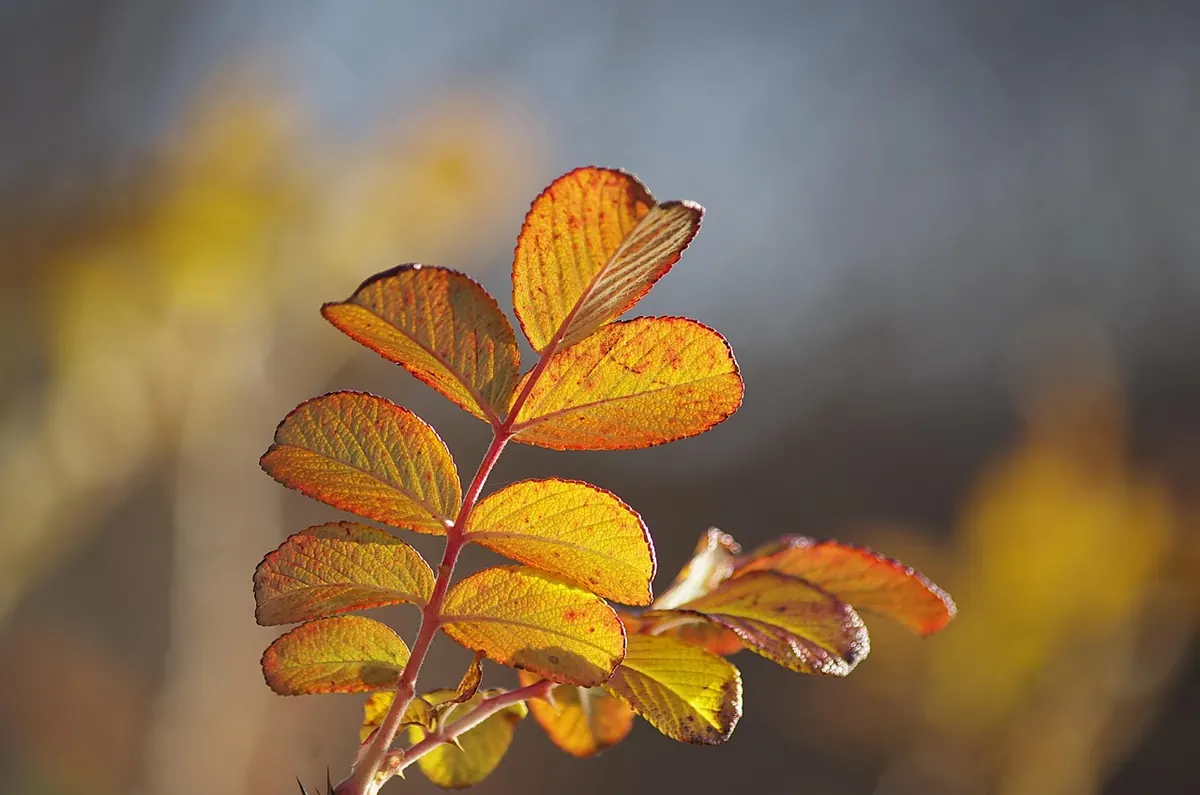
If you have ever started a journal in January and abandoned it by February, you already know that reflection works best when it has a rhythm. A blank page every day can quickly become another item on your to-do list, another thing you are behind on. Seasons give you a gentler rhythm. They arrive whether or not you feel ready, and they ask different questions: what is beginning, what is expanding, what is ready to be put down, what needs rest. Seasonal journaling is not about writing every day or producing tidy entries. It is about sitting down a few times a year, with a few honest questions, and noticing what has changed since the last time you looked.
There is something useful about marking a season rather than a calendar year. January asks you to reinvent yourself all at once; spring asks you to notice what is already stirring. Summer asks what you want to make room for; autumn asks what you are ready to finish. Winter asks what needs warmth and what needs quiet. You do not have to answer every question or turn your journal into a record of constant self-improvement. You only need a small, repeatable way to check in with your own life.
The prompts below are grouped by season: twelve for spring, twelve for summer, twelve for autumn, twelve for winter. Use them as a menu, not a checklist. Answer one in a sentence or fill three pages. Skip the ones that feel flat. Return to the ones that keep tugging at you. A prompt that seems boring in March may become the most useful question you ask yourself in October.
How to Use the Prompts Without Overthinking It
You do not need a new notebook, a retreat, or a perfect hour of silence. A kitchen table and ten minutes will do. The point is to lower the barrier, not build a new ritual you have to maintain. The more elaborate the setup, the easier it is to postpone. Keep the tools simple: something to write with, something to write on, and a few questions that feel worth your attention.
- Choose three prompts, not twelve. Read through the set for the current season and mark the questions that make you pause. Start there. Three is enough to create a small conversation with yourself.
- Write the question at the top of the page. It keeps you anchored when your thoughts wander into planning or replaying conversations. If you drift, come back to the sentence you wrote down.
- Set a timer for ten minutes. Stop when it rings, even mid-sentence. You can come back tomorrow. A short entry you actually write is more useful than a long entry you keep imagining.
- Leave blanks without guilt. A half-answered prompt is still useful. If a question opens something too large, write one sentence and close the notebook. You are not being graded on completeness.
- Revisit once before the season ends. Read what you wrote, add a short note in the margin, and notice what shifted. Sometimes the most revealing part is the phrase you underlined or avoided.
Keep the prompts where you can see them: tucked inside the cover, pinned above a desk, or saved in a note on your phone. The goal is to make reflection easy to return to, not to create another task that sits unfinished. If you miss a season entirely, simply begin with the one you are in. The practice is meant to meet you where you are, not shame you for where you have been.
One useful rule is to write for yourself first and edit never. Seasonal journaling is not an essay, a performance, or a future artifact. It is a place to think out loud. If you would not say it to a friend, you can still write it down. The page can hold the messy version.
Spring: What Is Beginning?
Spring prompts work best when you lean toward small experiments rather than big declarations. You are looking for signs of energy, not forcing a reinvention. Maybe a morning walk feels newly possible. Maybe you want to clear one shelf, send one message, or try one class without deciding it will change your life. Spring is a good time to test the ground rather than build the whole house.
- What feels ready to begin, even if it is small?
- Where am I waiting for permission I can give myself?
- What habit or object no longer fits the person I am becoming?
- Which room, drawer, or corner of my life needs air?
- What did I learn last winter that I want to carry forward?
- Who or what has been quietly encouraging me?
- What would I try this month if no one was watching?
- Where am I confusing motion with progress?
- What is one tiny experiment I can run this week?
- Which word or phrase feels like a theme for this season?
- What do I want to say yes to more often?
- How will I notice when I am pushing too hard?
After writing, choose one prompt and circle a single small action. Not a five-year plan, not a new identity: one action. Send the message. Clear the corner. Try the class once. Spring rarely asks for a grand leap; it usually asks for a window opened.
Summer: What Is Expanding?
Summer can be loud, social, and full of daylight. These questions are about expansion, but also about the boundaries that keep expansion from turning into overcommitment. A full calendar can look like a rich life from the outside while feeling like a crowded room from the inside. Use these prompts to notice the difference between what is growing and what is simply taking up space.
- What feels expansive right now, and what feels stretched too thin?
- Where am I saying yes out of habit rather than desire?
- What does rest look like when it is not earned?
- Who makes me feel more like myself, and how can I spend time with them?
- What have I been hiding because it feels too bright or too much?
- Which summer memory do I want to repeat on purpose?
- What is one boundary that would make this season kinder?
- Where am I rushing a process that needs heat and time?
- What do I want to savour slowly?
- What would a genuinely unproductive afternoon look like?
- How do I want to show up in the photos I am not taking?
- What is one small joy I can schedule instead of waiting for it?
If a prompt about rest feels uncomfortable, that is worth noticing. Many people can say yes to rest only after they have finished everything else, which means rest never arrives. Summer journaling can be a place to practise rest as a decision rather than a reward.
Autumn: What Is Ready to Be Put Down?
Autumn is a good season for honest accounting. Not the harsh kind, where you tally what you failed to do, but the practical kind: what has ripened, what has finished, and what you are still carrying out of habit. A project may have run its course. A commitment may belong to an older version of your life. A worry may have become so familiar that you mistake it for responsibility.
- What have I harvested this year, even if it looks different than planned?
- What am I ready to finish or put down?
- Which obligation has outlived its usefulness?
- What do I need to say out loud before the year turns?
- Where am I mistaking busyness for belonging?
- What deserves a proper ending rather than a quiet fade?
- What am I grateful for that I have not thanked anyone for?
- Which lesson keeps returning, and what is it asking me to change?
- What can I simplify before winter?
- Who do I want to check in with before the year gets loud?
- What am I still carrying that belongs to someone else?
- How can I make room for rest before I am forced to?
Autumn is also a good time to write down what you are proud of without qualifying it. It is easy to list what remains unfinished. It takes more care to name what you tended, what you completed, what you survived, and what you learned. Let the season hold both: the harvest and the empty branches.
Winter: What Needs Rest?
Winter is not a productivity contest. It is a season of shorter days, closed doors, and quieter rhythms, even if the world around you keeps asking for output. These prompts are about restoration, honesty, and protecting your energy without turning rest into another project. You are allowed to do less and still call the season meaningful.
- What needs rest in me, and what am I still forcing to produce?
- What can I release from this year without re-litigating it?
- Where do I feel most quiet, and how can I return there?
- What did I survive that I have not given myself credit for?
- What is the smallest comforting routine I can keep?
- Which relationship needs warmth rather than more effort?
- What am I ready to imagine for next year without planning it?
- Where have I been too hard on myself?
- What do I want to carry into the new year, and what can stay in this one?
- What does enough look like this week?
- What can I say no to in order to protect my energy?
- What would make this winter feel gentler?
Winter journaling can be brief. A few lines about what you are tired of, what you are grateful for, and what you need next week may be more useful than a long reflection. The season already asks you to slow down; let the page follow.
What to Do When the Prompts Feel Flat
Some prompts will not land. That is normal. Flatness can be information: maybe you are tired, maybe the question belongs to a different season of your life, or maybe you need a more concrete angle. Do not force depth. Try one of these adjustments instead.
- Write one sentence and stop. A single honest sentence is enough. You can come back later or let it stand alone.
- Change the angle. If “What am I ready to put down?” feels abstract, try “What did I do this week that made me sigh?”
- Use concrete details. Name the room, the conversation, the object, the time of day. Specifics often open more than big questions do.
- Borrow a question. Answer a prompt as if a friend asked it, or write what you think someone else would say about you.
- Close the notebook. Not every prompt needs to be answered today. Leaving a question alone can be its own form of respect.
The goal is not to feel inspired by every question. The goal is to keep a door open between you and your own life. A flat prompt can still point you toward what you actually want to write about.
A Five-Minute End-of-Season Review
Before the season turns, read what you wrote. You do not need to summarise it neatly or turn it into a lesson. Just add four short notes at the bottom of the page:
- What changed? Look for small shifts in energy, routine, relationships, or attention.
- What stayed the same? Notice what is steady, even if you wanted it to move faster.
- What do I want to carry forward? Name one habit, question, or intention worth keeping.
- What can stay behind? Let one obligation, worry, or story end with the season.
This review takes five minutes and gives the next season a starting point. It also turns your journal into a record of movement rather than a collection of abandoned entries. You can see how your answers change, where you repeat yourself, and what you keep promising to do.
Seasonal journaling works because it is not a demand for consistency. It is an invitation to return. You will miss prompts, forget the notebook, and write in a rush on the last day of the season. None of that breaks the practice. The next season will arrive with its own questions, and you can begin again.
You are not trying to finish the season. You are trying to notice it.
Photo: Andrey_and_Olesya / Pixabay