By nine o'clock the kitchen is quiet enough to hear the fridge hum, but your head is still replaying the eleven a.m. meeting and drafting replies to messages nobody has sent. That noise does not stop just because the day did. A short evening journaling ritual will not silence it either, but it gives the noise somewhere to go before you lie down.
The aim is not a beautiful diary or better prose. It is ten calm minutes at the end of the day that you can repeat on a tired Tuesday, not only on a Sunday when you feel inspired. Everything below is built for that: low effort, low equipment, and a clear ending.
Give the Ritual One Job
Before you buy a notebook or claim a corner of the flat, decide what the evening page is actually for. A ritual without a job drifts into vague guilt about not writing.
Most evenings, people want one of three things:
- Emptying out. Getting the day's clutter onto paper so it stops circling. Useful if you fall asleep rehearsing tomorrow's problems.
- Noticing. Recording two or three specific good things so the day does not blur into a grey smear. Useful if the weeks are starting to look alike.
- Setting down. Writing what is unfinished and when you will handle it, so the evening is not spent half-working. Useful if you check your inbox at eleven at night.
Pick one as the main job. The others can appear on the same page without competing for it. And note what this is not: a record of everything you did. Nobody is owed the plot of your day.
Prepare the Room Before You Prepare the Page
The environment does more of the work than willpower does. Set it up in the afternoon, when you still have energy for small decisions.
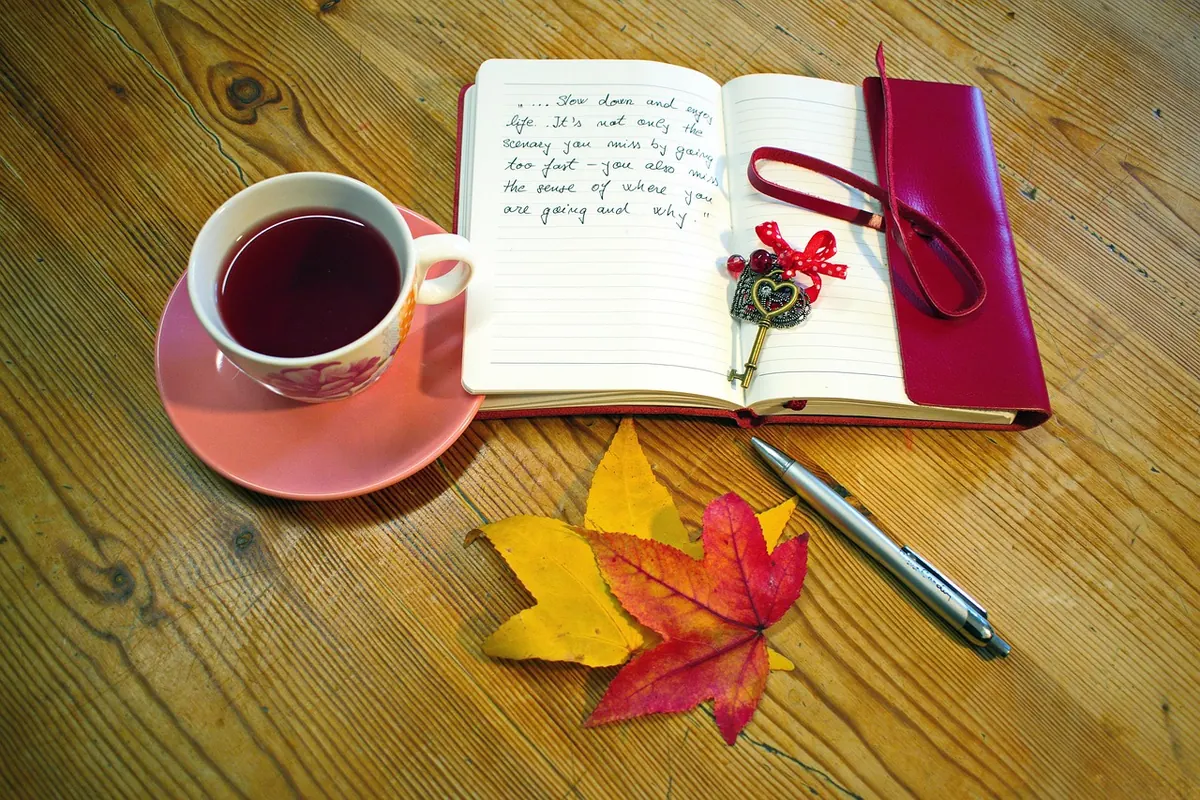
Choose one spot and keep using it: the end of the kitchen table, the arm of the sofa, a stool by the window. Leave the notebook open there with the pen resting on top. That way the only action left at nine o'clock is sitting down, rather than hunting for a pen that works.
Light matters more than people expect. One lamp at shoulder height, turned low, makes the page the brightest thing in the room. Overhead lighting keeps the brain in work mode; a single warm pool of light tells it something else is happening now. Keep the phone in another room if you can, or face down and out of arm's reach if you cannot. Checking it before you write pulls you straight back into the day you are trying to leave.
Add whatever makes sitting still pleasant — a blanket, thick socks, a mug of something decaf. If you like sound, choose one instrumental album at low volume and play it every night. Lyrics compete with thought. The same music, repeated, becomes a cue in itself.
Build a Three-Part Page That Does the Work
A blank page asks too many questions. Give it a simple structure you can fill in without deciding anything:
- The facts. Three lines about what actually happened. "Left the office late. Called my sister. Skipped the walk." No interpretation yet — just the bones of the day.
- The feeling. One honest sentence. "I felt behind all afternoon and pretended otherwise." Naming it plainly often lowers the volume more than a page of analysis does.
- The setting down. One line about what is unfinished and when you will pick it up. "Ask Priya about the invoice at nine tomorrow." Once it has a time attached, it stops asking to be remembered.
If you have more to say, say it. But those three blocks are the minimum that makes the ritual feel finished rather than abandoned halfway.
Make It Short Enough to Repeat
Ten minutes. Set a timer if you tend to either rush or disappear into the page. On a hard night, three sentences count as a complete ritual — the habit survives on the ordinary nights, not the inspired ones.
Anchor it to something you already do: after the dishes, before the last episode, once the dog has been out. A ritual attached to an existing habit needs far less remembering than one floating loose in the evening.
And when it slips — because it will, on late trains and bad weeks — shrink it rather than skip it. One sentence about the day is enough to keep the thread. Whatever you do, do not move the notebook. Leaving it open in its spot is what makes tomorrow easier.
Prompts for Nights When the Page Stays Blank
Some evenings the pen hovers and nothing comes. Answer one of these, not all of them. Prompts are a can opener, not a questionnaire.
- What was the last thing I was thinking about before I sat down?
- What took more energy today than it was worth?
- What is one thing about today that nobody else would have noticed?
- What am I carrying into tomorrow that could wait until morning?
- Where did I say yes when I wanted to say no?
- When was the calmest minute of my day, and what made it calm?
- Who crossed my mind today, and why?
- If tomorrow could only hold three tasks, which three?
Close It Deliberately
A ritual needs an ending, or it trails off into scrolling. Reread your last line, write one word at the bottom of the page for tomorrow — a name, a task, "rest" — then close the notebook, put the pen down and switch off the lamp. That small sequence is the signal that the day is closed for business.
Try to keep screens out of the fifteen minutes that follow. Checking messages straight after writing quietly undoes the whole thing; the point of the page was to put the day down, not to pick it back up.
A ritual ends when the notebook closes, not when you run out of things to say.
Two last permissions. Write badly. Cross nothing out, edit nothing, and let the handwriting fall apart by the bottom of the page. And if a night's writing brings up worry that follows you to bed, or a low mood that does not lift, that is worth talking through with a doctor or therapist rather than pushing through alone.
Start Tonight With One Page
Put the notebook on the table now, while you are still standing. Lay the pen across it. Decide which of the three jobs this page has, and set a ten-minute timer for after the dishes.
When you sit down, write three lines of facts, one line of feeling, and one line about what you are setting down. Add a single word for tomorrow at the bottom, close the book, and turn off the lamp. That is the whole ritual — small enough to repeat, structured enough to work on a night when you would rather not think about it at all.
Photo: Darkmoon_Art / Pixabay